How to Plan Cardio for a Sustainable Hotel Gym
H for hotel owners, developers and procurement teams, with practical commercial cardio planning, factory questions and project guidance.
H for hotel owners, developers and procurement teams, with practical commercial cardio planning, factory questions and project guidance.
Buying commercial cardio equipment is a project decision, not just a product comparison. This guide organizes the practical questions that help owners, distributors, contractors and procurement teams create a more useful brief.
Why this topic matters in a commercial facility
Hotel gyms need to feel dependable and easy to use while fitting the property's space, brand and operating targets.
For hotel owners, developers and procurement teams, the decision is rarely about one machine in isolation. It is about how the cardio range fits the room, the user profile, the staff workflow, the destination market and the way the order will be delivered. A useful brief makes those assumptions visible before a quotation is approved.
The same principle applies to a factory-direct conversation: model, configuration, quantity, branding, packaging and after-sales support should be discussed together. That gives the buyer a clearer basis for comparison and gives the supplier fewer reasons to guess.
How to apply the idea to a cardio project
Start with room dimensions, guest profile, opening date, power, noise, circulation and a balanced mix of treadmills, bikes and ellipticals. Sustainability should be connected to actual operating conditions.
Start by recording the facility type, floor dimensions, expected frequency, access route, available power and preferred product mix. Then identify which decisions are confirmed and which still need supplier or local professional review. This simple separation prevents a brochure statement from becoming an untested project assumption.
Use a balanced product range where appropriate. Treadmills, upright bikes, recumbent bikes, ellipticals, stair climbers, rowers and ski trainers serve different movement and programming roles. The best mix reflects actual users and the operating model rather than a generic list of equipment.
Questions to confirm with a manufacturer
Request model-level electrical details, packaging, delivery route, installation preparation, spare parts and support terms. Avoid broad environmental claims without evidence relevant to the chosen product.
Ask for current model specifications, packed dimensions, net and gross weight, electrical requirements, installation preparation, warranty basis, recommended spare parts and the expected lead-time assumption. For an OEM program, confirm artwork, colors, console language and packaging before production.
A credible supplier should be able to explain what is known, what depends on the order and what must be checked for the destination. This is especially important when the topic involves sustainability, rehabilitation, education or other claims that require evidence and careful scope.
Send your facility type, destination, quantity and product direction for a focused factory response.
A buyer checklist for the next conversation
Prepare a one-page brief with the project country, facility type, quantity, product categories, user profile, target opening or rollout date and any branding requirements. Add photos or a floor sketch when available. The more concrete the brief, the more useful the first factory response can be.
Compare suppliers on more than unit price. Include product fit, documentation, packaging, service access, spare-parts planning, communication and the likely cost of downtime. For multi-site projects, also ask how model consistency and replenishment will be handled.
Keep the final quotation organized by model and quantity, with configuration and delivery assumptions visible. This makes internal approval easier and reduces confusion between a visual concept and the actual order scope.
Where this fits in a complete cardio strategy
This article is one part of a wider commercial cardio decision. Use the product collections to compare equipment formats, the factory page to understand production and quality questions, and the contact page to send a complete brief. Related planning should include room layout, shipment preparation, maintenance and after-sales communication.
A hotel cardio proposal should make the guest experience and the operational case easy to compare. A responsible project conversation stays specific about users, evidence, configuration and support. That approach helps a distributor, operator or project contractor make a decision that can still work after the equipment has been installed.
When the project is ready, send the equipment list and destination to the WDERFITNESS export team. The response can then focus on the relevant models, OEM options, shipment details and open questions instead of generic marketing language.
Visual Content Plan
Use real factory and product photography where available. The following briefs are ready for an AI image workflow or a photographer's shot list; keep the final images factual and consistent with the actual equipment.
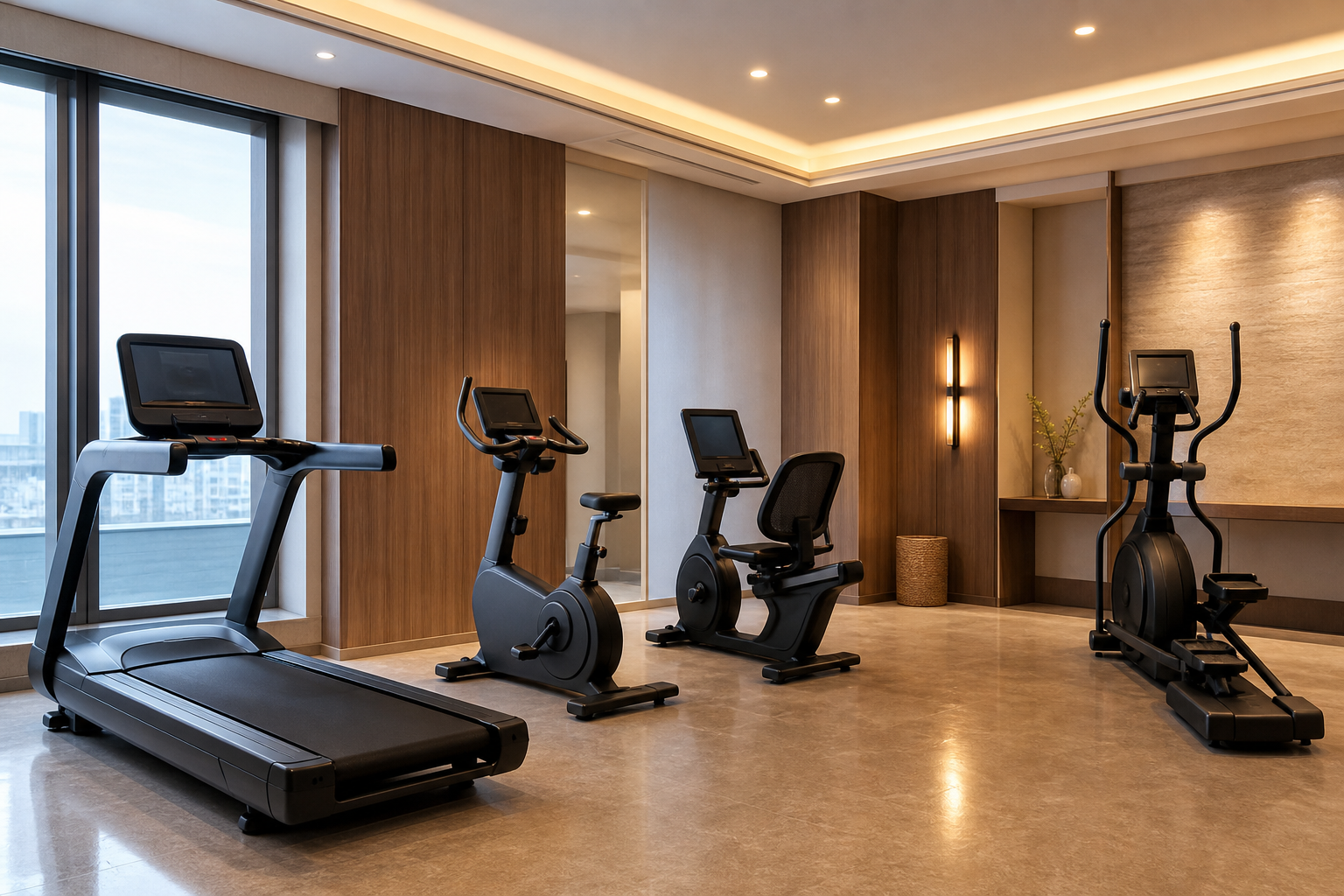
Show the article topic in a commercial setting
Caption: How to Plan Cardio for a Sustainable Hotel Gym in a real project context.
ALT: How to Plan Cardio for a Sustainable Hotel Gym commercial cardio project
Prompt: Photorealistic commercial cardio equipment scene illustrating hotel cardio planning around guest experience and environmental goals, professional B2B fitness facility, only treadmills, bikes, ellipticals and cardio machines, realistic lighting, no readable logos or text, no watermark
Support factory and procurement credibility
Caption: Product, quality and shipment questions should connect before ordering.
ALT: Chinese factory team reviewing commercial cardio equipment requirements
Prompt: Realistic Chinese commercial cardio equipment factory team reviewing product specifications and shipment planning, clean production environment, documentary photography, no readable text, no fake certificates
Visualize the application
Caption: The right cardio mix follows the facility and its users.
ALT: How to Plan Cardio for a Sustainable Hotel Gym facility application
Prompt: Premium realistic gym, hotel, university or rehabilitation cardio room for hotel owners, developers and procurement teams, equipment arranged with clear circulation, professional architectural photography, no readable brand text, no watermark
Frequently Asked Questions
What should I send a commercial cardio supplier first?
Send facility type, destination, room or project context, product mix, quantity, timeline and branding requirements. A floor sketch or site photo is helpful.
Can one supplier support a mixed cardio order?
A factory-integrated supplier can review a mixed order across treadmills, bikes, ellipticals and other cardio formats, subject to the current catalogue and configuration.
How should I verify a sustainability or rehabilitation claim?
Ask for model-specific documentation, intended-use guidance and the limits of the claim. Do not treat general marketing language as a certification or medical outcome.
Make the next step specific.
A strong commercial cardio decision combines product fit, facility conditions, shipment planning and after-sales clarity. Use this guide to prepare the brief, then confirm the model-level details with the factory before placing an order.
Request Project InformationNeed help with a commercial cardio project?
Share your destination and equipment requirements for a focused response.
Trigger: Show at 40% scroll or after 30 seconds
Fields: Name, Email, Phone, Country, Facility Type, Product Mix, Quantity
Button: Send My Requirements
Turn this topic into a practical project brief.
WDERFITNESS can help organize product selection, OEM details, factory questions and shipment planning for global B2B buyers.
Request Project Information