How to Choose a Commercial Treadmill for a Gym, Hotel or Distribution Project
Learn how to compare commercial treadmills by traffic, motor system, running area, console, service access and total project fit.
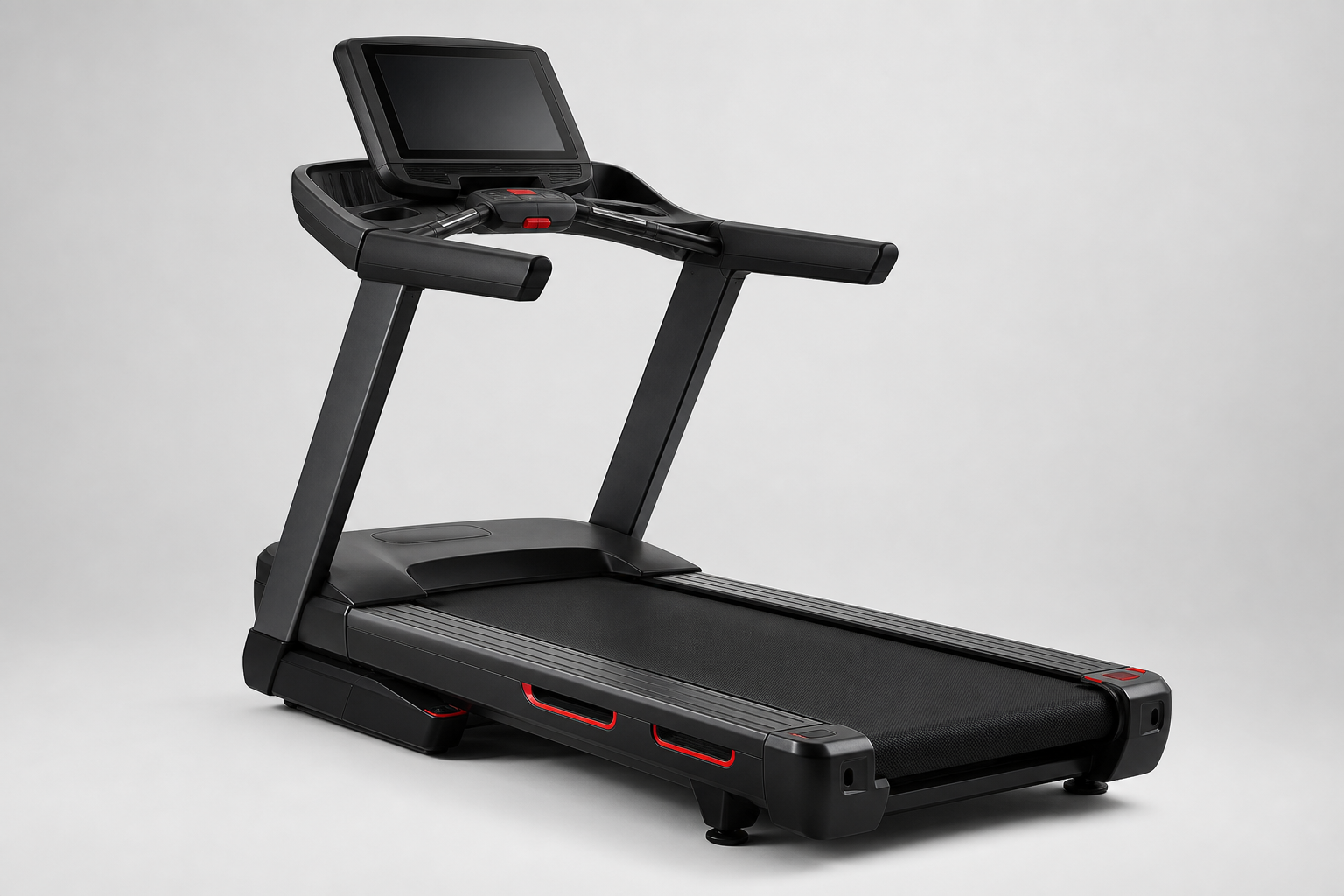
Choose a commercial treadmill by matching the intended traffic, running platform, drive system, console, service access and shipment constraints to the facility. For a gym, hotel or distribution project, a specification sheet alone is not enough: confirm the duty profile, local electrical configuration, packing details and support plan before requesting a quote.
Buying commercial cardio equipment is a project decision, not just a product comparison. This guide organizes the practical questions that help owners, distributors, contractors and procurement teams create a more useful brief.
Start with the facility, not the headline horsepower
A commercial treadmill is a working asset in a fitness facility. The right specification depends on who will use it, how often the deck will be occupied, how much service access is available and how the machine must arrive at the project. A model that is appropriate for a hotel wellness room may not be the right choice for a high-traffic gym, even when the two products look similar in a catalogue.
Before comparing a motor label or screen size, write a short facility brief. Include the number of daily users, peak training periods, expected workout duration, room dimensions, available power, delivery access, local service capability and the desired brand position. This brief gives a manufacturer the context needed to recommend a model rather than simply send a price list.
For distributors, add the local market requirements: preferred voltage and plug, language needs, target retail position, packaging rules, spare-parts expectations and the quantity of each model. A repeatable product brief makes future replenishment easier and keeps different customer quotations comparable.
The six specifications that deserve a closer comparison
The first specification is the running platform. Review the running area, deck construction, belt tracking, cushioning approach and access for cleaning or service. A wider or longer running area may improve user confidence, but it also affects footprint, packaging and the amount of space needed around the unit. The correct choice is a balance between user experience, facility layout and logistics.
The second is the drive system. Ask whether the treadmill uses an AC or DC motor, how the controller manages load, what speed range is intended for the model and how the manufacturer validates the drive system. Do not treat a single horsepower number as a complete durability assessment. Motor, controller, deck, belt, frame, cooling and intended duty all work together.
Third, compare incline and speed controls from an operator's point of view. A commercial user should be able to change intensity without confusion. Tactile shortcut controls, emergency stop design, handrail position and console visibility are practical details that affect daily use and safety.
Fourth, examine the console. Buyers should compare display readability, workout information, device connectivity, language requirements and the way the console can be replaced or serviced. A large screen is not automatically better for every project; reliability, legibility and support documentation often matter more.
Fifth, confirm the frame and user capacity in the context of the target facility. The frame should feel stable under normal operation, and the published user-weight guidance should be clear. Finally, review dimensions, net and gross weight, carton size and installation requirements. These details influence freight, door access and the opening schedule.
How to match a treadmill to common B2B applications
A commercial gym normally needs a dependable treadmill group that can handle regular peak periods. The selection should consider the ratio of treadmills to other cardio formats, how visible the units are from the training floor, how quickly a technician can access the deck and what spare parts the operator can hold locally.
A hotel gym often prioritizes a compact footprint, intuitive operation, clean appearance and straightforward support. The treadmill should fit the room without restricting circulation, and the project team should verify power, delivery route and installation preparation before the opening date. Guests may use the equipment with very different experience levels, so clear controls are valuable.
A distributor needs more than one good machine. The range should have a clear product ladder, consistent documentation, stable packaging and a sensible replacement-parts conversation. Request model-to-model differences in writing: running area, drive, console, maximum speed, incline, frame, carton and warranty terms.
For a corporate gym, apartment gym or rehabilitation-oriented environment, the usage profile may be lighter or more specialized. That does not mean the buyer should skip service planning. It means the product mix and user guidance should be adapted to the space, the audience and the operator's maintenance resources.
Send your destination, quantity, facility type and preferred specifications. We will organize the relevant models, packing information and OEM options for review.
Factory checks that make a quotation more useful
A serious quotation should connect the product to the production and shipment process. Ask how incoming components are checked, how frames and welded parts are inspected, how electrical assemblies are tested and how a finished treadmill is run before packing. The useful answer is not a vague promise of quality; it is a clear explanation of what is checked and when.
At the factory stage, treadmill projects commonly require visual inspection, dimensional checks, electrical safety review, console verification, belt tracking review and a running or endurance check appropriate to the model. The exact test plan should be confirmed with the supplier, especially when the buyer has a market-specific requirement.
Before shipment, align the final inspection record, product labels, manuals, spare-parts list, packaging marks and loading plan. For an OEM project, confirm artwork approval before production and ask how the custom logo, color or packaging is inspected against the approved file. These steps reduce avoidable surprises after the container leaves the factory.
A practical commercial treadmill comparison table
When comparing suppliers, create one row for each model and one column for each decision. Include product code, running area, motor type, speed range, incline range, user capacity, console, power requirement, dimensions, carton dimensions, net weight, gross weight, warranty basis, lead time assumption, customization options and service notes.
Keep confirmed information separate from assumptions. If a specification depends on configuration or destination, mark it for confirmation instead of filling the cell with a guess. This is especially important for motor language, electrical standards, shipping terms and warranty coverage.
The lowest unit price may not be the lowest project cost. Add freight volume, installation time, spare-parts stock, service response, replacement difficulty and the commercial impact of downtime. A slightly different model can be a better choice if it reduces the operational friction of the entire project.
Questions to ask before requesting a quote
Send the supplier a concise brief: facility type, destination country, quantity, preferred product mix, available floor area, expected usage, voltage, branding needs, delivery term and target opening date. Attach a floor sketch or photos when possible. A simple drawing often explains constraints that a product name cannot.
Ask for the current specification sheet, product photos, packing details, installation notes, warranty terms and recommended spare parts. For a mixed order, request a consolidated quotation so the product combination, packing and shipment assumptions are visible together.
Finally, ask what information the factory still needs to confirm. The best buying conversation is transparent about open questions. It gives both sides a chance to correct the brief before production rather than after delivery.
Visual Content Plan
Use real factory and product photography where available. The following briefs are ready for an AI image workflow or a photographer's shot list; keep the final images factual and consistent with the actual equipment.
Show the main product in a commercial context
Caption: A commercial treadmill selected for a high-use cardio floor.
ALT: Commercial treadmill for a gym cardio floor
Prompt: Premium documentary product photograph of a commercial treadmill in a bright modern gym, realistic Chinese factory-manufactured cardio equipment, clean neutral background, no readable brand text, high detail, natural light
Explain factory inspection and testing
Caption: Factory inspection should connect specifications with a repeatable test process.
ALT: Technician testing a commercial treadmill at a cardio equipment factory
Prompt: Realistic commercial cardio equipment factory inspection scene, Chinese quality technician in a clean polo checking a treadmill console and running belt, professional documentary photography, no fake certificates, no readable text
Help buyers visualize delivery preparation
Caption: Packaging and loading decisions affect the total project cost.
ALT: Commercial treadmills prepared for export shipment
Prompt: Photorealistic export warehouse with commercial treadmills protected in professional cartons and organized for container loading, Chinese factory setting, realistic logistics documentation without readable text
Support layout planning
Caption: A clear floor plan makes the product mix easier to review.
ALT: Commercial treadmill arrangement in a hotel fitness room
Prompt: High-end hotel fitness room with commercial treadmills and cardio machines arranged with clear circulation, realistic architectural photography, no people, no visible brand text
Frequently Asked Questions
What makes a treadmill commercial grade?
Commercial grade is a combination of intended duty, frame and running-platform design, drive system, controls, testing, service access and support. It should be evaluated against the facility's real usage rather than one marketing number.
Is AC or DC better for a commercial treadmill?
The answer depends on the model, duty profile, controller, cooling and service plan. Ask the manufacturer to explain the complete drive system and intended application instead of comparing motor type alone.
How many treadmills does a gym need?
Start with room size, membership profile, peak demand, class programming and the desired cardio mix. A supplier can suggest a starting quantity when you provide these inputs, but the final layout should be checked against circulation and service access.
What should be included in a treadmill quotation?
Request model, configuration, quantity, technical specifications, packaging, lead time, shipping assumption, branding, warranty and after-sales support in one comparable document.
Make the next step specific.
A strong commercial cardio decision combines product fit, facility conditions, shipment planning and after-sales clarity. Use this guide to prepare the brief, then confirm the model-level details with the factory before placing an order.
Request a Commercial QuoteNeed help comparing commercial treadmills?
Share your facility type, destination and target quantity. Our export team will reply with a focused shortlist.
Trigger: Show after the reader reaches 40% scroll or after 30 seconds on the page
Fields: Name, Email, Phone, Country, Facility Type, Target Quantity, Requirements
Button: Send My Requirements
Turn your treadmill brief into a project quotation.
Connect with the WDERFITNESS export team for commercial treadmill selection, private-label discussion and shipment planning.
Request a Commercial Quote